
Orthopedics
Knee Arthroscopy
Keyhole surgery that looks inside the knee and repairs what it finds in the same sitting — usually under an hour, usually home the same day.
Keyhole surgery that looks inside the knee and repairs what it finds in the same sitting — usually under an hour, usually home the same day.
At a glance
- In hospital
- 1 day
- Total stay
- 7 days
- Cost
- Quoted after clinical assessment
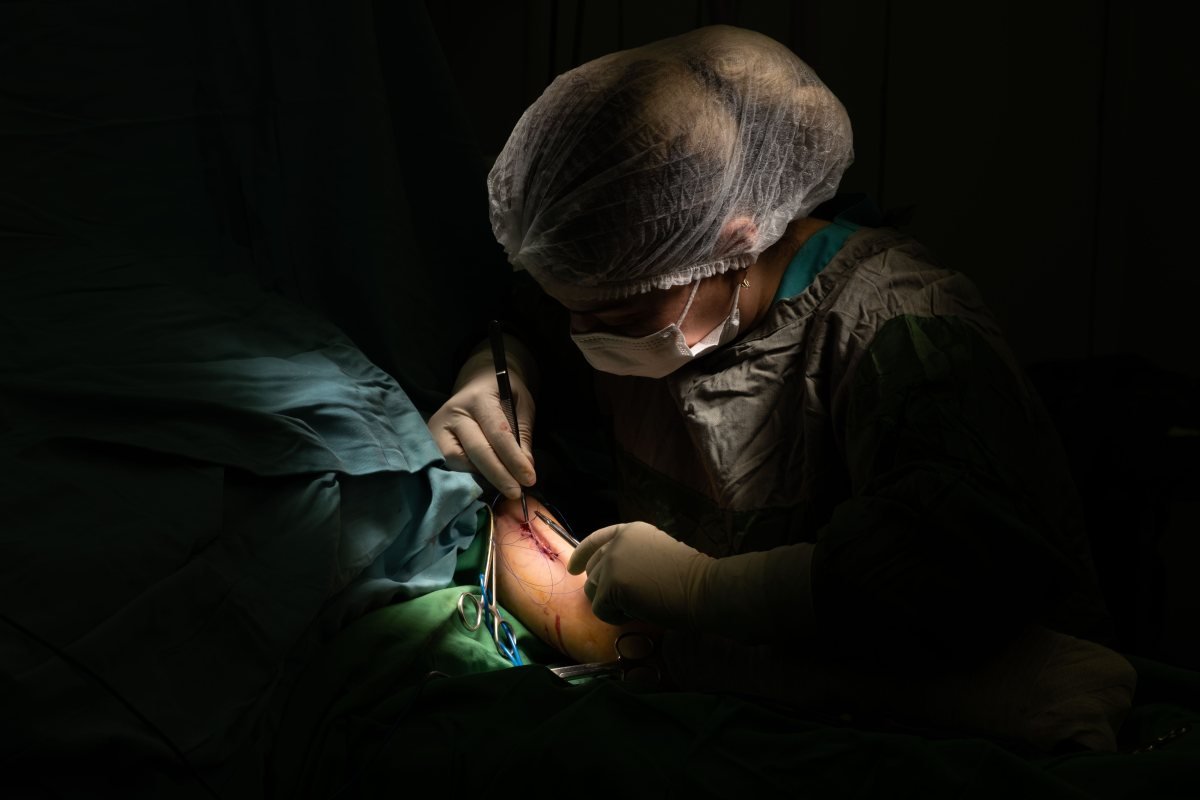
A pencil-thin camera goes into the knee through a small cut and shows the joint on a screen. Through a second cut the surgeon works with fine instruments that shave, grip, cut and stitch. Sterile fluid is pumped in to open the joint out and wash it clear, which is what makes everything visible.
What it can treat
Torn menisci, cruciate and collateral ligament damage, loose fragments of bone or cartilage, an inflamed joint lining, tendon and bursa problems, and a kneecap tracking badly. It is diagnostic and therapeutic at once: the surgeon sees the damage and repairs it in the same operation.
The operation itself
It averages under an hour. Anaesthesia can be local, regional (numb from the waist down, which is what allows both knees to be done at once) or general — the choice is discussed beforehand. The cuts are small enough that most need only a stitch or a strip, which is why there is less pain and less infection risk than open surgery.
Recovery and what to expect
Most people go home the same day. Crutches are usual for a few days, and most walk with a slight limp within one to two weeks. Swelling settles within days if the leg is elevated. Bend and straighten the knee as far as discomfort allows from the start — that movement is the treatment, not a reward for healing. Full recovery is two to six weeks, and the benefit is usually clear by four to six.
Before you agree to anything
The one question that changes your recovery is whether the meniscus is being repaired or trimmed. A repair is stitched and needs a brace and protected weight-bearing for weeks; a trim does not. Ask which is planned, and ask what happens if the surgeon finds something different once the camera is in — because on this operation, that is common.
This page is general information, not medical advice. Whether a procedure is right for you is a decision for a qualified clinician who has seen your reports.
Related treatments
-
Total Knee Replacement
The worn knee joint is replaced with an implant. Most patients are walking with support within a day or two and complete...
-

Partial Knee Replacement
Only the damaged compartment of the knee is replaced, preserving healthy bone and ligament. Suitable when arthritis is l...
-
Revision Knee Replacement
Replacement of a previous implant that has loosened, worn or become infected. More complex than a first replacement, and...